 Welcome to our first TennisAsia Monthly Newsletter ~ Sep 2026 ~ Why Matches Matter


CHAPTER 1 : I'M NOT LIKE THE
OTHERS
A story about a father who thought he was protecting his daughter's opportunity until he began to wonder whether he really was helping. (8 MIN READ)
When Mia first started individual coaching, her father stood just beside the fence as she played. He never thought of himself as the kind of parent who interfered. Those parents, in his mind, were loud, opinionated, impossible to miss.
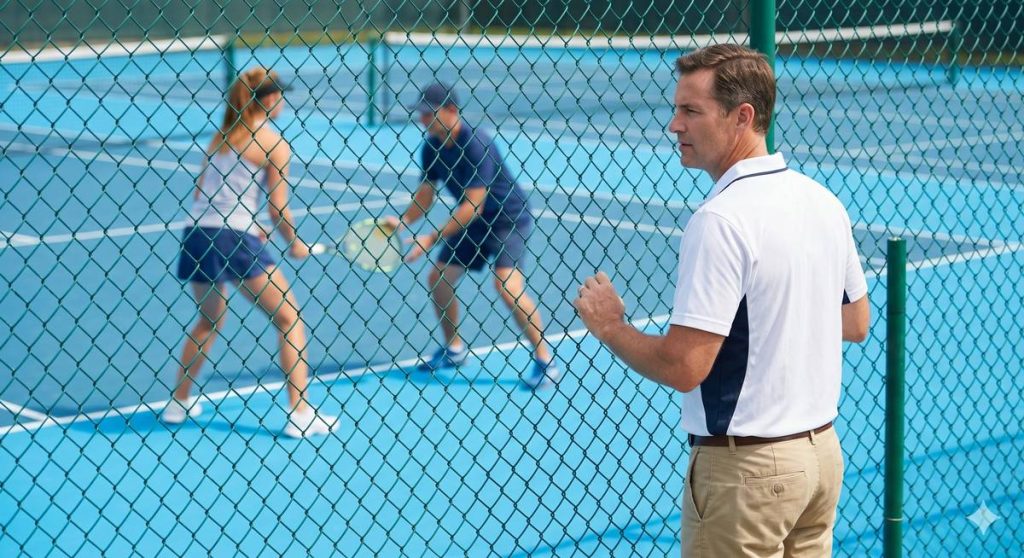
He was not like that.
He wasn't trying to coach over the coach or make the session about himself. He was simply attentive.
Lessons were expensive, after all. Time was limited. And if he knew his daughter well - which he did - then it seemed only natural to use that knowledge well.
He could tell when Mia was frustrated before her face changed. He could tell when she was getting lazy, when she was thinking too much, when she needed calming down and when she needed a push.
So if a ball rolled off to the side of the court, he collected it.
If Mia drifted between drills, he helped signal her back towards the ball.
If the coach gave an instruction that seemed important, he sometimes repeated it later, just to make sure it stayed with her.
When she came over for water, her bottle was already uncapped. Her towel was in reach. If she forgot what drill they were doing, he reminded Mia.
If she looked discouraged, he gave her something short and practical.
“bend your knees, move your feet, watch the ball.”
None of this seemed excessive to him. It seemed responsible.
In fact, he sometimes suspected that left entirely to herself, Mia would waste half the lesson in small distractions.
She was bright, capable, and talented in flashes, but not yet disciplined. Part of being a parent, he thought, was protecting the value of the opportunity in front of her until she was mature enough to protect it herself.
The coach never said much about it.
That, to him, was confirmation. A good coach understood the value of support.
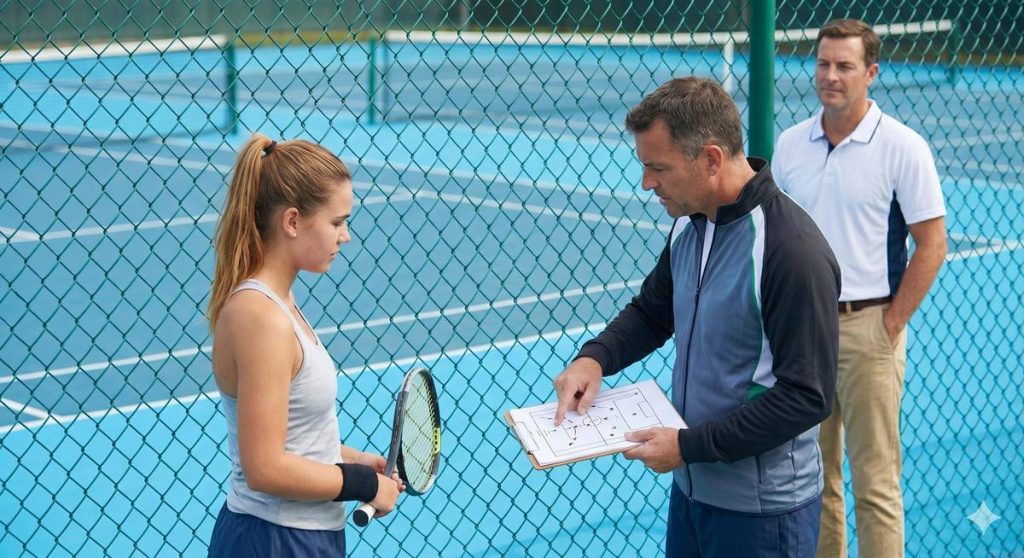
Now and then there were small pauses - moments where the coach seemed about to say something and then didn't - but her father read those as nothing more than professional tact, or concentration, or perhaps simple agreement that everyone was trying to help the same player.
Most sessions ended the same way: Mia tired, her father reflective, the coach calm and courteous.
If Mia was a little withdrawn afterward, he put that down to effort.
Improvement was tiring.
Concentration was tiring.
Being corrected for an hour was tiring.
That didn't mean anything was wrong. It meant the lesson had asked something of her.

One afternoon, though, the session felt unusually heavy.
Mia was working on her serve, and almost nothing about it looked comfortable. Her toss wandered. Her timing went.
The more she tried to fix one piece, the more the rest of the motion seemed to disappear.
A decent serve would appear from nowhere, only to be followed by three that landed in the net or went sailing long.
Her father watched with a tightening jaw.
He could see what the problem was, or at least he felt he could.
She was overthinking.
Slowing down in the wrong places.
Letting one bad serve leak into the next.
He wanted to tell her to reset. To simplify. To stop getting trapped in every miss.
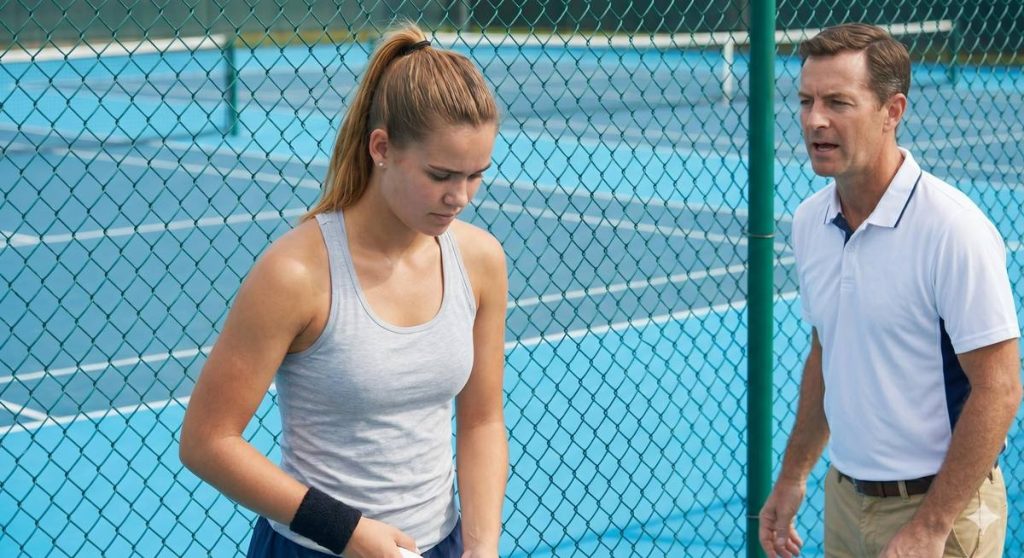
Instead, he waited for a pause. “Don't complicate it.”
Mia glanced at him. Then looked away.
The coach threw her the next ball and continued.
“Don't complicate it.”
Mia glanced at him. Then looked away.
The coach threw her the next ball and continued.
A few minutes later, when Mia went to collect balls that had scattered near the fence, her father stepped over to gather the furthest ones first. It was practical. No point wasting lesson time on ball collection. By the time she turned back, he already had three in hand and tossed them gently into her basket.
The session went on. Mia improved a little, then lost it again.
On the drive home, he tried to frame it constructively.
“You were getting there at the end,” he said. “But you let the misses get in your head.”
Mia looked out the window. “I know.”
“You do that sometimes. One goes wrong and then everything becomes very dramatic.”
“I said I know.”
He let a few seconds pass.
“You also need to listen and then trust what you're being told. If you keep changing things every ball, it's going to be all over the place.”
Mia crossed her arms. “I was trying.”
“I'm not saying you weren't trying.”
“Sure.”
He exhaled quietly, the kind of breath adults use when trying not to turn a conversation into an argument.
“I'm trying to help you,” he said.
That landed badly, though he couldn't quite have said why. Mia gave a small shrug and turned further toward the window.
For the rest of the drive, neither of them said much.
Later that evening, he replayed the lesson in his mind. Not with doubt, exactly, but with the mild frustration of someone who could see progress close by and didn't understand why it kept slipping away.
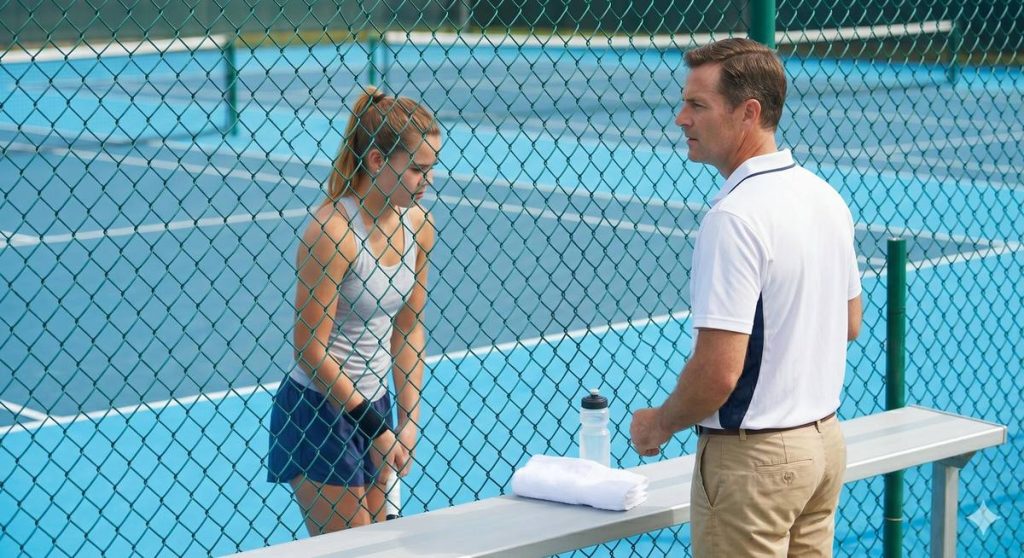
Mia had so much ability when she settled.
The problem, as he saw it, was not effort or talent.
It was consistency. Focus. A bit more composure. A bit more responsiveness.
A better use of the help around her.
By the next lesson, his view had not changed.
He still stood by the fence. He still watched everything. When a ball rolled loose, he moved for it automatically. When Mia came over between drills, her water was ready before she asked.
He did not think he was making things harder.
He thought he was doing what good parents do when something matters.