Welcome to our first TennisAsia Monthly Newsletter ~ Sep 2026 ~ Why Matches Matter


CHAPTER 2 : SUPPORT
A story about a father whose love shows up in every detail, and the moment he begins to question whether helping Mia means knowing when to step back. (8 MIN READ)
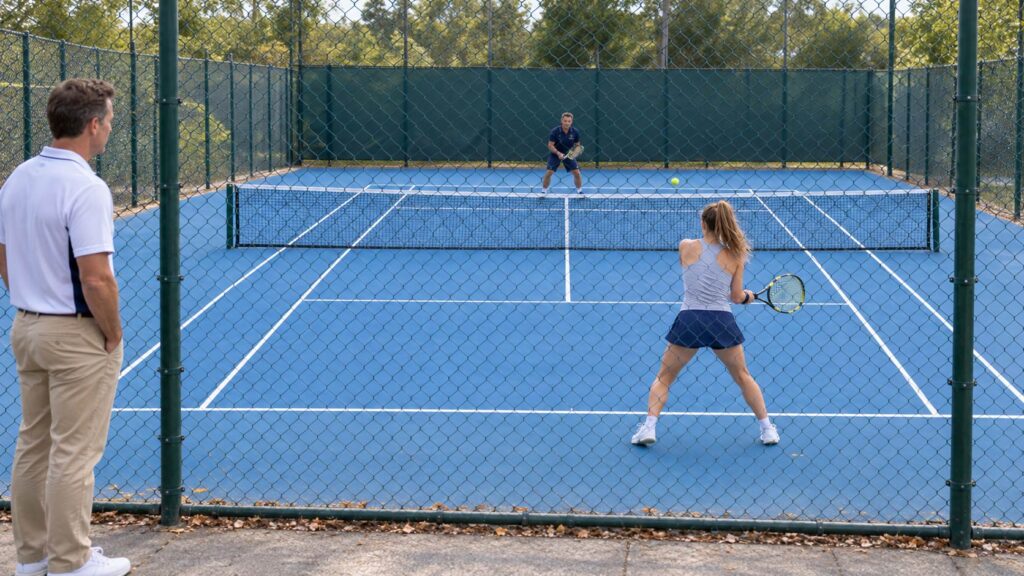
Mark was the kind of father people described well. Dependable. Engaged. Generous with his time. He arrived early, stayed present, and watched Mia closely - not vaguely, not through a phone, not with the distracted half-attention so common among adults at children’s sport.
When she trained, he watched fully.
If a drill changed, he noticed.
If her timing slipped, he saw it quickly.
If something wasn’t clicking, he felt it almost in his own body.
This, to Mark, was what care looked like.
He had never believed much in the detached version of support - the folding chair, the coffee cup, the easy “Good job” on the drive home. That kind of parenting looked passive to him. If your child was doing something difficult and important, then surely your role was not simply to attend. Your role was to be engaged.
So he was.
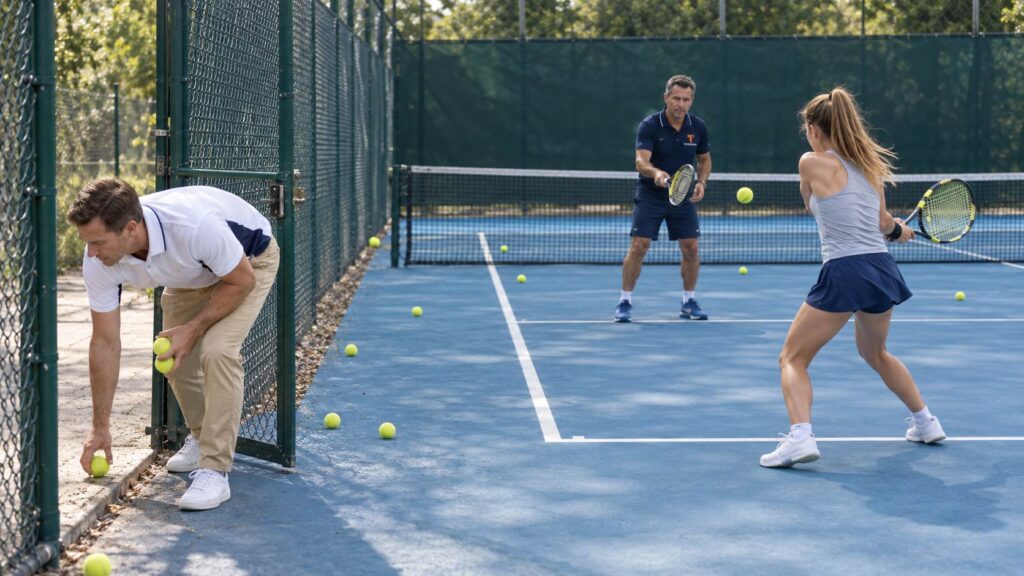
If balls rolled wide, he collected them. If a basket needed moving, he moved it. If Mia came to the fence between drills, he could usually tell from her face whether she wanted reassurance, instruction, or a reminder not to unravel after a rough sequence.
Sometimes he gave all three.
By then, he and the coach had settled into something that looked cooperative from the outside. The coach stayed calm and measured. Mark stayed alert and available. Nothing openly clashed. But at times the line between supporting Mia and joining the session himself felt less clear than he realised.
That afternoon began with backhands.
Mia had come in flat from school, her energy slightly dulled, and the first part of the lesson never quite settled. Her feet were slow. Her spacing drifted. The coach kept things steady and the instructions simple.
“Set earlier.”
“Better spacing.”
“Again.”
Mark watched from the fence, feeling the familiar impatience that came when he could see the problem so clearly.
She was waiting too long. Reaching. Letting one bad ball affect the next.
When Mia glanced toward him after a mishit, he tapped his own feet lightly against the ground: move.
She looked away at once, but on the next couple of balls her footwork sharpened. To Mark, that meant something. Not proof of anything dramatic - only confirmation of what he had always believed: Mia benefited from his eye.
The coach was running the lesson, of course, but a parent who knew the child well could reinforce things. Sometimes that mattered.
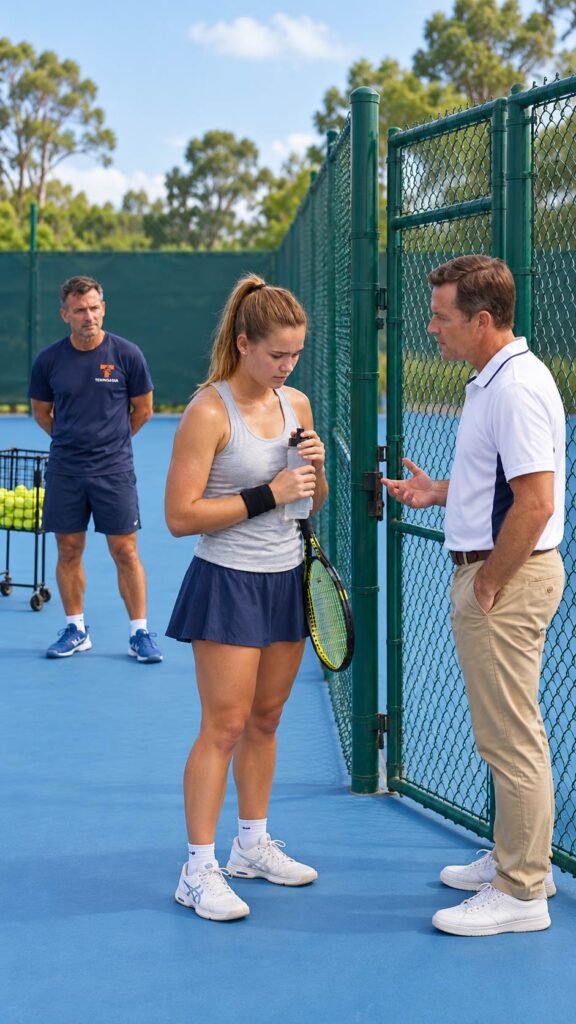
Later, during a water break, Mia came to the fence flushed and quiet, and Mark was already holding out her bottle.
“You’re backing up too much on the backhand,” he said, keeping his voice low. “Take it earlier.” She drank, nodded once, and turned back.
The coach was waiting by the basket.
For no clear reason, Mark felt mildly interrupted, though no one had said a word.
The second half went better. Not smooth, but better.
Mia found a few clean backhands, stayed balanced for longer rallies, and looked for brief moments like the player she was always threatening to become.
Mark felt the usual lift that came with those glimpses. She had it in her. That was what made the inconsistency so difficult to watch.
At the end of the session, another parent stepped over and smiled.
“She works hard,” the woman said.
Mark nodded. “When she settles, yes.”
The woman watched Mia gathering the last balls with the coach. “You’re very involved,” she said.
Mark gave a short laugh. “I try not to waste the opportunity.”
The woman smiled politely and said goodbye.
He replayed the comment on the walk to the car. Very involved. People said that as though involvement might require apology. As though distance were wisdom. As though love, to be respectable, had to stand several feet back with its hands in its pockets.
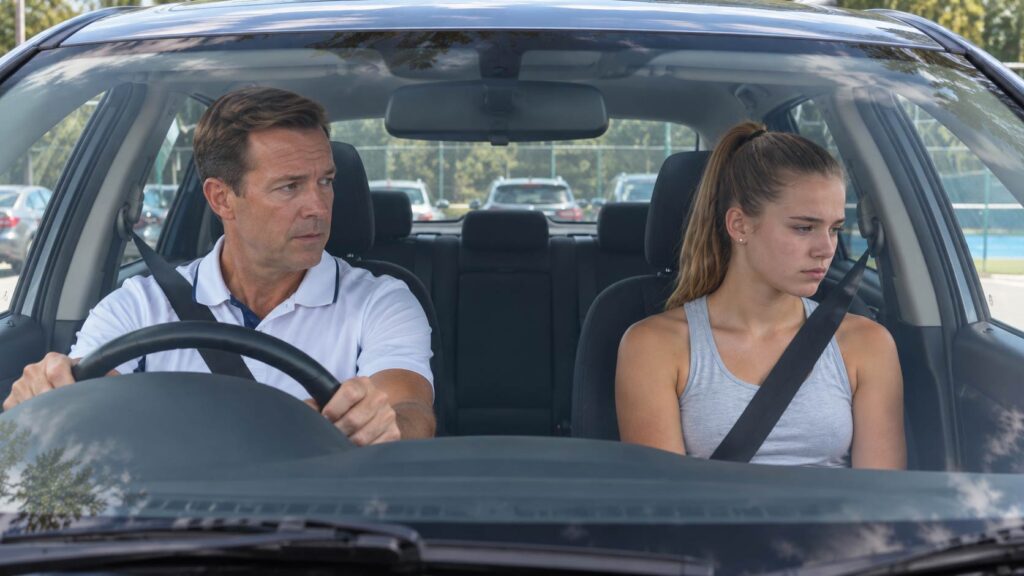
In the car, Mia buckled in and leaned her head against the window.
“You were better once you moved your feet,” Mark said.
“And when you took the backhand earlier, that was much better.”
She said nothing.
“Did you hear me?”
“Yes.”
“You sound annoyed.”
“I’m not annoyed.”
He glanced at her. “You are.”
Mia kept looking out the window. “You and Coach both talk to me.”
“I’m not talking to you at the same time.”
“Not exactly at the same time,” she said. Then, after a pause: “It’s just a lot.”
Mark felt the immediate urge to correct her. It was not a lot. It was feedback. Attention. Help.
“You’re thinking about it the wrong way,” he said. “No one’s piling on you. We’re helping you.”
That ended the conversation, though not in a satisfying way.
Later that night, one small moment returned to him - Mia at the fence with the water bottle, the coach waiting by the basket, the strange sense of having stepped half an inch too far into something.
Nothing had happened. No disagreement. No visible tension. Still, by the next lesson, when Mia looked toward the fence once or twice, Mark hesitated before saying anything.
Not because he thought he was wrong. Only because, for the first time, he had begun to wonder whether being helpful and being heard were always the same thing.