 Welcome to our first TennisAsia Monthly Newsletter ~ Sep 2026 ~ Why Matches Matter


CHAPTER 1 : THE DAY I KEPT THE
BASKET IN THE SHED
A story about a twelve year old with a perfect forehand and the coach who had to get out of his own way. (8 MIN READ)
Ben was twelve years old with freckles across his nose. Laces always slightly loose. The kind of kid who said “sorry” when the ball clipped the net and dribbled over. And he had an awesome forehand.
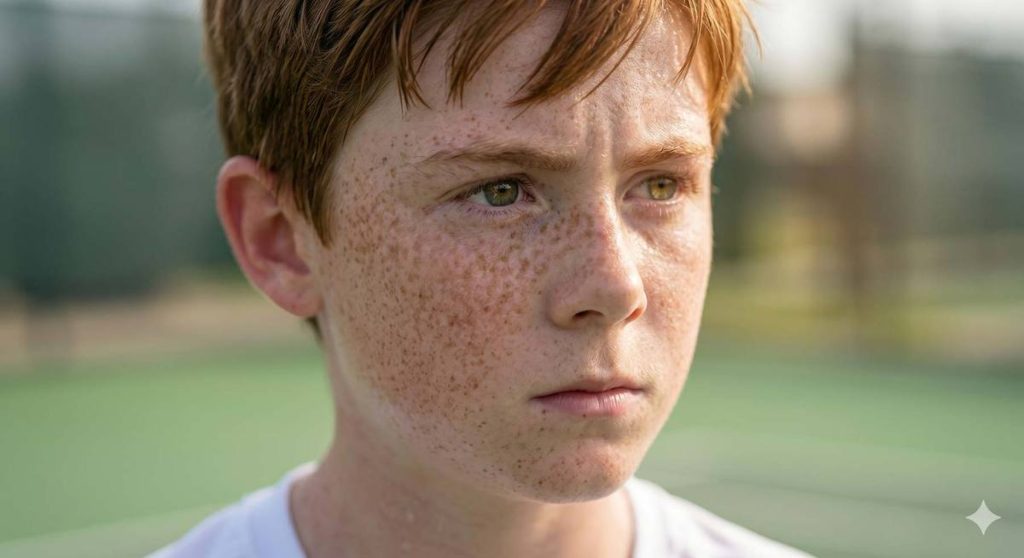
Low to high. Early preparation. Textbook finish over the shoulder. If you paused him mid-swing, you could have dropped the image into a coaching manual.
But Ben couldn't piece it together in a point. Every time the ball came back a little different — higher, heavier, wider — something unravelled. His timing disappeared. His feet froze. His shoulders tightened.
Then he'd look at me. Not frustrated. Not angry. Just searching.
“Tell me what I'm doing wrong.”
So I did what I'd always done. I fed him another ball.
The basket sat beside me like proof of professionalism. Thump. Feed. Hit. Correct. Repeat.
- “Earlier preparation, Ben.” He nodded after every cue. Tried to apply it immediately.
- “Better spacing.” Tried to be the "good student".
- “Finish higher.” And when the ball came exactly where he expected? He looked great.
By the end of the session, he’d hit hundreds of forehands. Clean. Controlled. Technically sound. But when we played points at the end of the session, the same thing happened.
Variation. Disruption. Miss. Then the glance.
That was the moment something uncomfortable crept in.
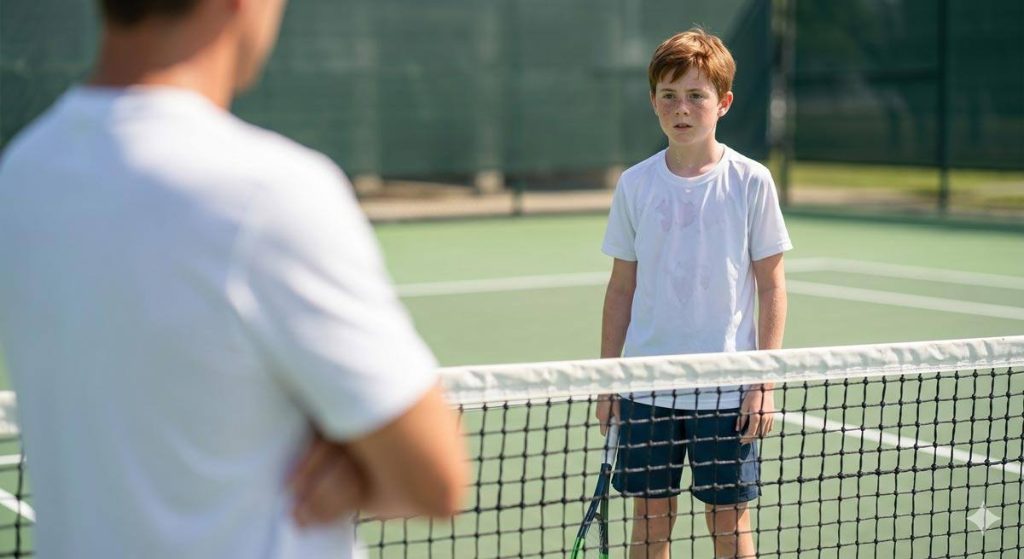
Ben wasn't learning tennis. He was learning how to perform when I controlled the variables. And I was mistaking repetition for progress.
The following week, I did something that made me uneasy. I left the basket in the shed. Instead, we played. Real points. Unpredictable shots. Awkward bounces. Imperfect rhythm.
Within minutes, the errors came. Ben shanked one wide and looked at me, waiting for the diagnosis. Instead of speaking, I asked:
“What was different about the ball?”
He hesitated. “It bounced higher.” “And what did you do?” “The same thing.” There it was. Not a flaw in technique — a gap in awareness.
The next point, he adjusted his spacing slightly. Still missed — but differently. The third time, he managed to keep the point going. He didn't smile. He just nodded to himself. It was subtle. But it was his.

What I hadn't realised before that session was how uncomfortable silence can be. When you're the coach, there's pressure to add value constantly. To correct. To demonstrate. To justify your presence. Standing there, saying nothing, while a twelve-year-old works through a problem feels almost irresponsible. But something definitely shifted that day. The less I filled the space, the more Ben stepped into it. He began noticing patterns.
- “This one's kicking up more.”
- “He's hitting crosscourt most of the time.”
- “I'm too close to the baseline.”
I wasn't giving him answers. He was building them. And that changes everything.
As coaches, we all carry a picture in our minds of what “good” looks like.
The ideal forehand.
The ideal movement pattern.
The ideal decision.
The danger is that we start watching for deviations from the model instead of really observing the human in front of us.
When Ben missed, my old instinct was to scan for technical errors.
Elbow position
Contact point
Follow-through
He hadn't read the spin.
He hadn't adjusted his feet.
He hadn't recognised the pattern.
No amount of perfect shadow swings fixes that. Tennis isn't played in repetition. It's played in response. And response can't be spoon-fed.
There's a quiet ego in over coaching.
It feels good to be the problem solver. The expert. The one with all the answers. It feels less comfortable to let a player struggle through three messy rallies while you stand there with folded arms. But something powerful happens in that struggle. Ownership.
When Ben figured out how to adjust to a higher bounce without me telling him, his posture changed. He moved differently. More decisively. He wasn’t trying to execute my instruction. He was solving his problem. That’s a different kind of confidence and it lasts longer.
Toward the end of that month, Ben and I played a set.
No basket. No stoppages.
The old way
Feed, correct, repeat. Confidence depends on the sideline.
The shift
Ask. Wait. Observe. Let the player build their own answer.
The result
Ownership. Adaptation. Confidence that needs no audience.
Midway through, I sent him a looping, heavy ball to his forehand, the exact shot that used to undo him. He adjusted his feet. Created space. Rolled it back deep crosscourt. And the rally continued.
Another high ball. This time he stepped inside and took it early. Point won.
He didn't look at me. That was probably the best part for me. No search for approval. No question in his eyes. Just a quiet jog back to the baseline.
For the first time, he wasn't playing for feedback. He was playing the game.
I still teach technique.
Footwork matters. Mechanics matter, Fundamentals matter.
But they're only part of the picture.
What matters just as much, if not more, is helping a player notice. Adapt. Decide.
To become less dependent on the sideline and more attuned to what's happening across the net.
And if I'm honest, Ben helped me as much as I helped him. He forced me to ask harder questions about my role.
Am I feeding balls to stay in control?
Am I correcting to feel useful?
Am I talking because silence feels uncomfortable?
Or am I creating space for growth?
That shift from directing every detail to guiding discovery has shaped not just how I coach, but how I lead in every area of my life.
Whether it's a tennis court, a workplace, or a home, the goal isn't to be the centre of every solution. It's to help people trust their own adjustments.
I sometimes still see Ben around. He's taller now. Still apologises for net cords. But he competes differently. He watches. He adapts. He figures things out mid-rally.
Not because I fixed his forehand. But because I finally learned when to put the basket down.
